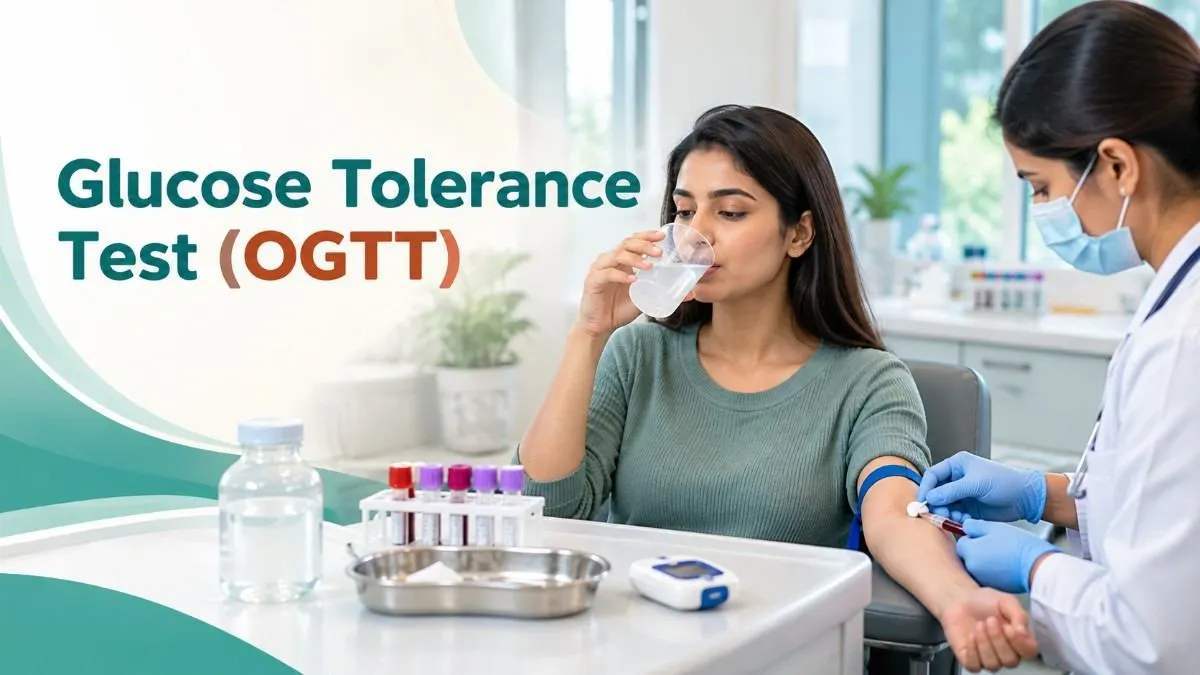
You can have a normal fasting blood sugar and still have a problem handling glucose after a meal. So how do doctors find out how your body actually responds to sugar?
That is where the glucose tolerance test, also called the oral glucose tolerance test (OGTT), becomes useful.
Instead of measuring blood sugar at just one point, the test observes how your body responds after you consume a measured amount of glucose. It is used in certain situations to identify prediabetes or diabetes and is also an important test for screening and diagnosing gestational diabetes during pregnancy.
An OGTT may sound complicated, but the basic idea is simple: your blood glucose is measured, you drink a glucose solution, and your blood is tested again at specified intervals.
Understanding the OGTT test procedure, preparation requirements, and normal results can help you know what to expect before the test.
What Is the Oral Glucose Tolerance Test?

The oral glucose tolerance test checks how efficiently your body handles glucose after a controlled glucose load.
For a standard OGTT in a nonpregnant adult, the test generally begins after an overnight fast. A blood sample is taken first, followed by a drink containing 75 grams of glucose. Another blood sample is then collected two hours after the glucose drink.
Why is this useful?
Your body should respond to the glucose by releasing insulin and moving glucose from the bloodstream into tissues such as muscle and fat. If blood glucose remains unusually high after two hours, it may indicate impaired glucose tolerance or diabetes.
The test therefore provides information that a single fasting reading may not capture.
How Is the OGTT Performed?
The OGTT test procedure requires some preparation, which is why it is usually scheduled in advance.
You will generally be asked to fast before the test. For a standard nonpregnant OGTT, fasting means having no food or caloric drinks for at least eight hours. Water is generally permitted.
Once you arrive at the laboratory, your initial blood sample is collected.
You then drink a glucose solution containing a measured amount of glucose, commonly 75 grams for the standard adult test.
After drinking it, you remain at the testing facility while your blood glucose is measured at the required time point. For the standard two-hour test, the second measurement is taken two hours after the glucose drink.
The test can take several hours depending on the protocol being used.
During this period, you may be asked not to eat, exercise, or drink anything other than water because these activities can influence the result.
How to Prepare for an OGTT

Good preparation helps make the result more reliable.
In the days before the test, you should generally continue eating your usual diet unless your healthcare professional gives you different instructions. NIDDK guidance notes that adequate carbohydrate intake before a standard OGTT is important, with at least 150 grams of carbohydrates per day for three days before testing.
You should also tell your healthcare professional about medicines or supplements you take because some can affect glucose levels.
Avoid strenuous exercise immediately before the test unless instructed otherwise.
Most importantly, follow the specific preparation instructions provided by your testing centre because protocols can differ depending on why the OGTT has been ordered.
Normal vs Abnormal OGTT Results
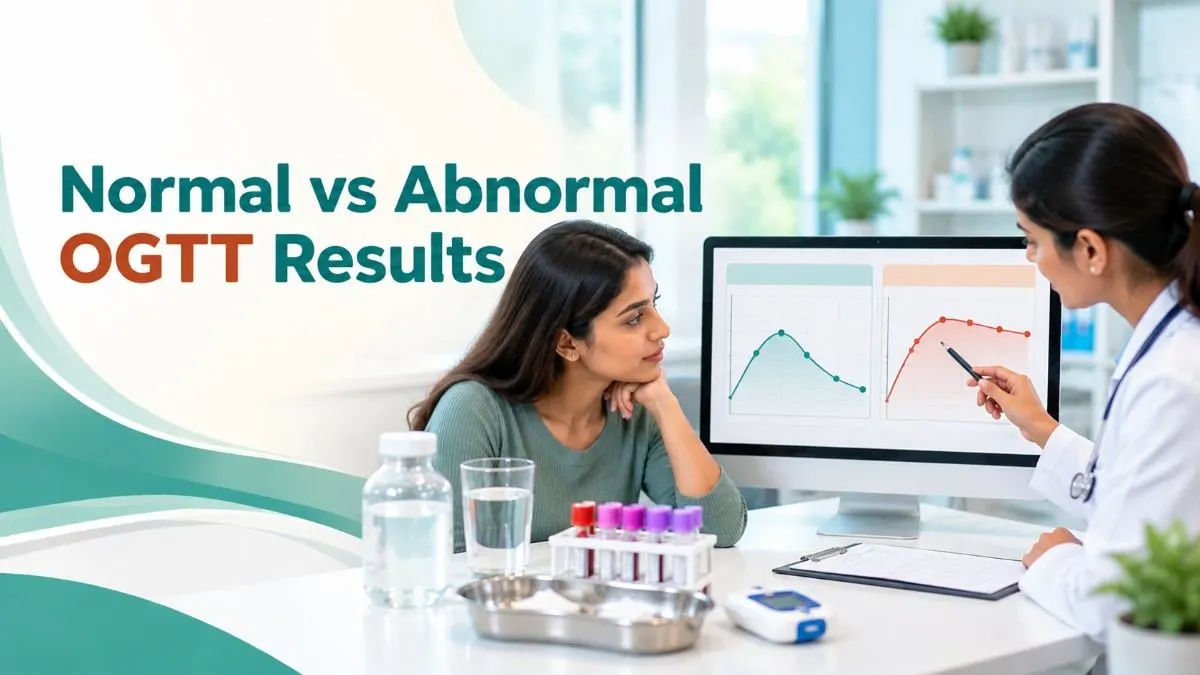
For a standard 75-gram OGTT in nonpregnant adults, the 2-hour glucose result is interpreted as follows:
2-hour glucose result | Interpretation |
Below 140 mg/dL | Normal glucose tolerance |
140 to 199 mg/dL | Prediabetes / impaired glucose tolerance |
200 mg/dL or higher | Diabetes range |
An OGTT result of 200 mg/dL or higher at two hours meets the laboratory criterion for diabetes. When there is no unequivocal hyperglycemia, an abnormal diagnostic result generally requires appropriate confirmation.
The important point is that an OGTT result should not be interpreted in isolation. Your fasting glucose, HbA1c, symptoms, medical history, and other test results may also matter.
OGTT in Pregnancy and Gestational Diabetes Screening

Pregnancy uses different glucose thresholds because blood sugar behaves differently during pregnancy and the risks associated with hyperglycemia are specific to maternal and foetal health.
One commonly used one-step approach involves a 75-gram OGTT performed at 24 to 28 weeks of pregnancy after an overnight fast. Blood glucose is measured while fasting and again at one and two hours after the glucose drink.
Under ADA criteria, gestational diabetes is diagnosed when any one of these values is met or exceeded:
Measurement | Threshold |
Fasting | 92 mg/dL |
1 hour | 180 mg/dL |
2 hours | 153 mg/dL |
Other healthcare systems use a two-step screening and diagnostic approach, so the exact test and cutoffs can vary.
This is why pregnant women should follow the protocol recommended by their obstetrician rather than comparing their results with a general adult glucose chart.
Is the Glucose Tolerance Test Painful?
The glucose drink itself is usually the more noticeable part of the experience.
Some people feel temporarily nauseous, light-headed, sweaty, or uncomfortable after drinking the glucose solution, although many people complete the test without significant problems.
The blood collection involves the usual brief discomfort associated with a blood draw.
If you feel unwell during the test, tell the healthcare professional conducting it rather than trying to push through the symptoms.
What Can Affect OGTT Results?
Your result can be influenced by factors other than diabetes.
Illness, stress, medications, changes in your usual diet, physical activity, and inadequate preparation can affect glucose metabolism. This is one reason the test requires standardised preparation and controlled conditions.
The test also has some variability. If the result does not fit your symptoms or other laboratory findings, your healthcare professional may recommend repeat or alternative testing.
What Is the OGTT Test Used For?
The OGTT is particularly useful when doctors need to understand how your body handles glucose after a controlled glucose load.
It can be used to diagnose diabetes or impaired glucose tolerance in selected nonpregnant individuals and is widely used in the evaluation of gestational diabetes screening.
It is not necessarily the first test everyone needs. Fasting plasma glucose and HbA1c are also commonly used to assess diabetes and prediabetes.
Your healthcare professional will decide which test makes the most sense based on your symptoms, risk factors, pregnancy status, and medical history.
OGTT Test Cost in India
The OGTT test cost varies between laboratories, cities, healthcare facilities, and testing protocols.
Pregnancy-related testing can also cost differently from a standard adult OGTT because the number of blood samples and testing process may vary.
Rather than choosing a laboratory based only on price, confirm what type of OGTT is being offered, how many measurements are included, and whether any additional consultation or laboratory charges apply.
Conclusion
The oral glucose tolerance test provides a controlled way to see how your body responds to glucose rather than relying on a single blood sugar reading.
For a standard 75-gram OGTT in nonpregnant adults, a two-hour glucose value below 140 mg/dL is considered normal, while 140 to 199 mg/dL falls in the impaired glucose tolerance range and 200 mg/dL or above falls in the diabetes range. Pregnancy has different diagnostic thresholds and testing protocols.
If your doctor recommends an OGTT, following the preparation instructions carefully is just as important as the test itself.
At Metabulix, we believe a glucose result is only one part of your metabolic health story. At Metabulix, we believe a glucose result is only one part of your metabolic health story. Our personalised diabetes management programs combine nutrition, lifestyle guidance, and evidence-based support to help you understand your results and make sustainable changes.